System not producing? Inverter throwing an error? We diagnose and repair residential and commercial solar across Arizona — including systems whose original installer has gone out of business.
We respond within 1 business hour.
When a solar system stops performing the way it should, the hard part usually is not the repair itself — it is finding someone who understands both the array and the roof it is bolted to. Most solar companies will not touch your roof. Most roofers will not touch your electrical. The fault very often lives exactly where those two trades meet, which is why it goes unfixed for months.
That intersection is the whole reason Solar Detach & Reset exists. We are a licensed electrical contractor (Arizona ROC #331356) and a board member of the Arizona Roofing Contractors Association. We diagnose, repair and restore residential and commercial solar installations across the state, and we do it without creating a roof problem while we solve an electrical one.
We have completed more than 7,500 projects across Arizona. That volume matters for repair work specifically, because diagnosis is pattern recognition. When you have opened thousands of combiner boxes and re-seated thousands of MC4 connectors in this climate, you stop guessing and start knowing where to look first.
Every repair we perform uses approved parts and sealants rated for Arizona heat and monsoon exposure, and every repair is backed by a new workmanship warranty — regardless of who installed your system originally.
Solar equipment tends to fail quietly. Unless you are watching your monitoring app closely, a system can run at half output for months before anyone notices — and by then you have paid for electricity you already owned. These are the signals worth acting on:
Any single one of these is worth a diagnostic. Several at once usually means more than one component has failed, which is common in systems that have gone several years without an inspection.
We repair the entire system, not just the parts that are convenient to reach. Because we are licensed for both the electrical work and the roof work, we can follow a fault wherever it leads instead of handing you off halfway through.
String inverters, microinverters and DC optimizers are the most common point of failure on an Arizona rooftop, and heat is usually why. We test under load, isolate the failed unit rather than replacing the whole bank on assumption, and replace with manufacturer-matched equipment so your monitoring and warranty stay intact.
UV exposure degrades wire insulation, conduit works loose, and a poorly seated MC4 connector will arc and eventually fail. We re-terminate connections properly — every MC4 gets an audible click, every time — and re-run or re-secure conduit to code.
Cracked glass, delamination, hot spots and hail or debris damage. We test module output individually so you replace what is actually failing rather than a whole row.
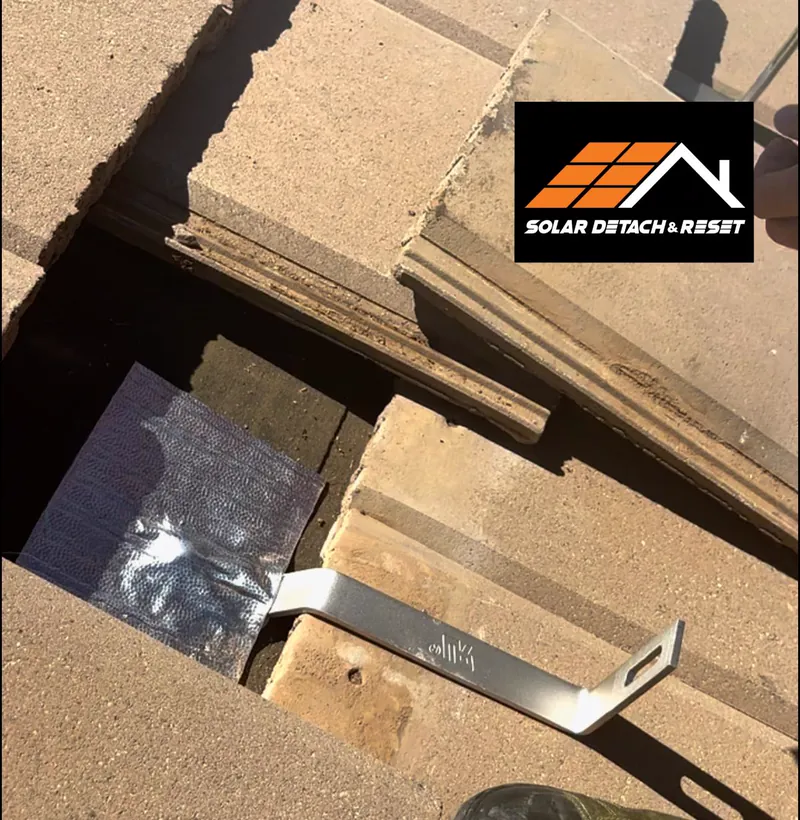
Loose or under-torqued mounts, missed rafters from the original install, corroded hardware, and failed flashing. This is the category most solar companies decline, and the one most likely to cause a leak. We repair the attachment and re-seal the penetration correctly, backed by our 100% money-back no-leak guarantee.
A system that is producing fine but reporting nothing is still a problem, because it means the next real fault goes unnoticed. We restore gateway, CT and network connectivity so you can actually see what your system is doing.
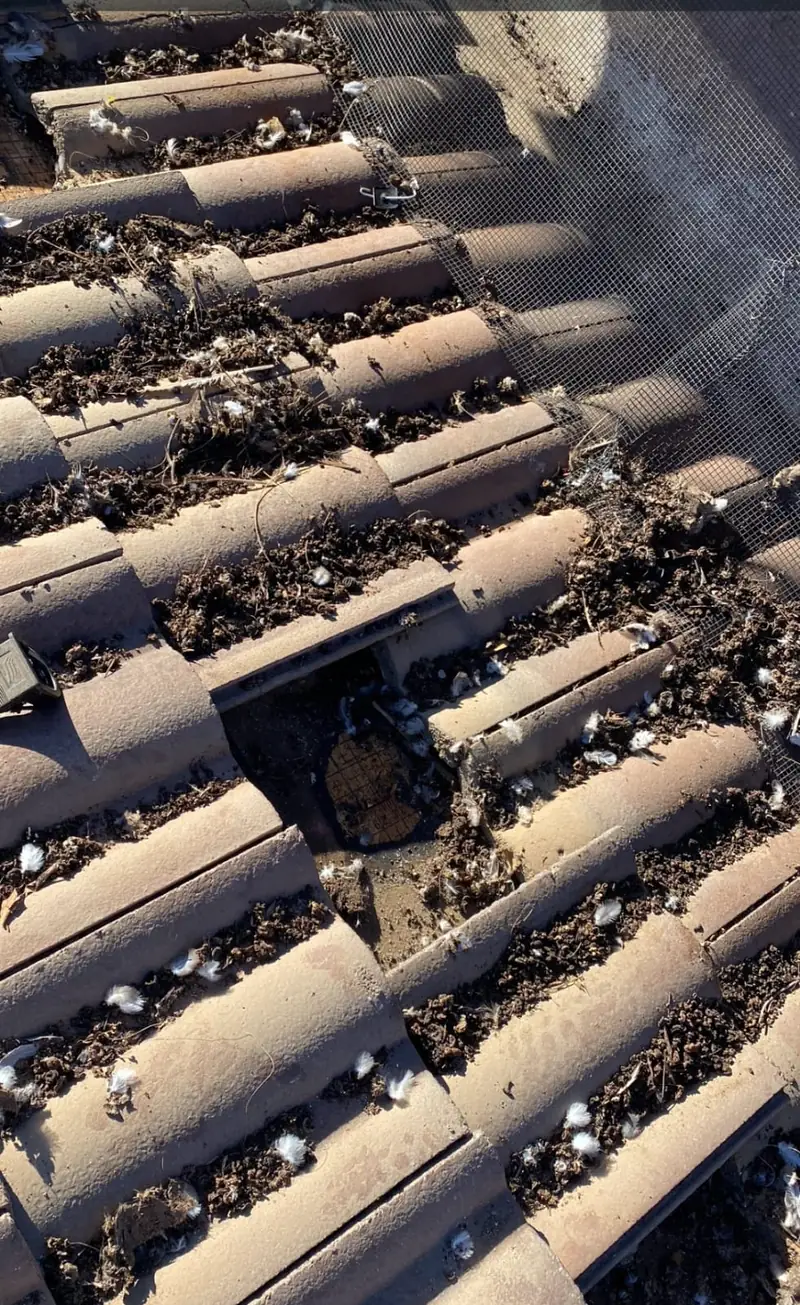
Pigeons nesting under an array cause more damage in Arizona than most homeowners expect — chewed wire, blocked airflow, corrosive droppings on mounts. We repair the damage and can fit bird guard so it does not recur.
Arizona has lost a significant number of solar installers over the past few years. When one closes, its customers are left holding equipment that still has fifteen or twenty years of life in it and no one willing to service it. Manufacturer warranties often survive the installer, but they are worthless if no licensed contractor will make the claim or do the work.
We service equipment from every major manufacturer and are certified for Tesla, Sunrun, SunPower, SMA, SolarEdge and Enphase. Every repair we make carries our own workmanship warranty — so the work is backed even though the company that built the system is not.
We service those systems. We are manufacturer-certified for Tesla, Sunrun, SunPower, SMA, SolarEdge, Enphase and APS equipment, which means we can carry out warranty-covered repairs on hardware we did not install, on both owned and leased systems.
Just as importantly, we issue a new workmanship warranty on the repairs we perform — even when the company that installed your system no longer exists. You are not stuck, and you almost certainly do not need to replace a system that simply needs repairing.
Get Your System Diagnosed →Repair work goes wrong when someone starts replacing parts before they have identified the fault. Our process is deliberately diagnostic-first, so you are paying to fix the actual problem rather than to eliminate possibilities.
Fault-finding. A technician tests the system end to end, identifies the problem and gives you written findings plus a repair estimate built on site. Credited toward your repair when we do the work.
The whole picture — panels, inverter, wiring, mounts, penetrations and measured production, in a written report. For home sales, pre-purchase checks, or a system never looked at.
A licensed technician comes to the property and tests the system end to end: production against expected output, inverter and optimizer behaviour under load, string voltages, connections, mounting hardware and the condition of the roof penetrations.
You get a clear written account of what failed and why, with photographs. Not a verbal summary at the truck — documentation you can keep, use for a warranty claim, or hand to a home inspector or buyer.
We price the repair while we are there, so you are not waiting days for a number. If the fault is covered by a manufacturer warranty, we tell you that too, even when it means a smaller job for us.
Once you approve, we complete the repair with approved parts, verify the system is producing correctly before we leave, and document the finished work. Scheduling requires a 50% deposit with the balance due on completion.
Curious what repairs typically run? See what solar repair costs in Phoenix.
If what you actually want is a full condition assessment rather than fault-finding — before buying a home with solar, before a roof replacement, or simply because the system has not been looked at in years — ask about our inspection service at $299, which covers panels, inverter, wiring, mounting hardware and performance verification, and includes a written report.
Solar hardware is generally rated against a temperate climate. Arizona is not that. The failure patterns we see here are specific to this environment, and they are the reason a system that would run untouched for fifteen years elsewhere needs attention here far sooner.
Panel output falls as cell temperature rises, so a Phoenix array in July is producing below its rated figure by design — that part is normal. What is not normal is the effect of sustained heat on the electronics. Inverters and optimizers mounted in direct sun, or in an unventilated garage that sits above 120°F, age dramatically faster than the same unit installed in shade. A large share of the inverter failures we attend are heat-related, and placement is very often the underlying cause.
Monsoon season combines the two things rooftop solar likes least: sustained high wind and driving rain arriving sideways. Wind finds any under-torqued mount or missed rafter and works it loose over a season. Rain then finds the gap that movement created. Most of the leak repairs we perform trace back to an attachment that was never fastened into structure correctly in the first place.
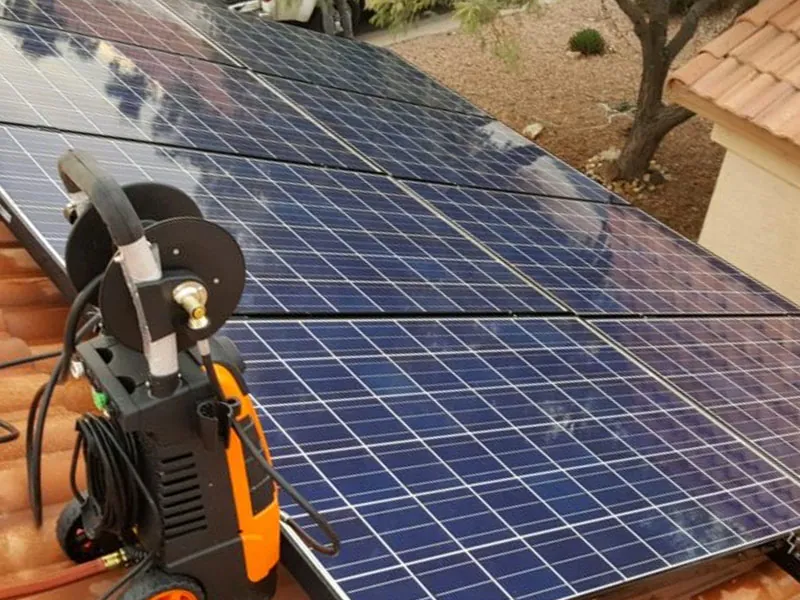
Dust accumulation costs real production between rains, and UV exposure degrades wire insulation and cable ties far faster than manufacturers' temperate-climate assumptions allow. Sagging, brittle wiring that has dropped onto hot tile is a fault waiting to happen.
The gap beneath a panel is close to ideal nesting habitat — shaded, sheltered and warm. Nesting material blocks airflow the array depends on for cooling, droppings corrode mounting hardware, and birds chew wiring. It is one of the most common causes of repair callouts in this state and one of the easiest to prevent permanently with bird guard.
Homeowners are frequently told a system needs full replacement when it needs a component repaired. Sometimes that advice is honest; often it is because replacement is a far larger sale. Here is how we actually assess it.
Repair is almost always right when the panels themselves are sound and the fault sits in the inverter, optimizers, wiring or mounting. Modern panels are typically warranted around 25 years and commonly outlast their inverter by a wide margin. Replacing an entire array because a single inverter failed is throwing away two decades of remaining asset life.
Replacement deserves consideration when a large share of the modules themselves have failed, when the array is genuinely at end of life, or when the system is so undersized against your current usage that expansion makes more sense than restoration. If you have added an EV or a pool pump since installation, the maths may genuinely have changed.
Timing matters if your roof is aging. If your roof has less than five years left, repairing the array now and then paying to remove and reinstall it later is paying twice for access. In that case it is usually cheaper to combine the work — the panels come off for the re-roof, the repair happens while they are down and easy to reach, and everything goes back onto a new roof at once. We will tell you if that is your situation, because it is the difference between one mobilisation and two.
Our diagnostic exists to answer this honestly. You get the finding in writing, with photographs, so you can weigh it yourself rather than take our word for it.







That last point matters more than it sounds. Subcontracted crews are why so much of the damage we repair exists in the first place — missed rafters, under-torqued mounts, penetrations sealed with whatever was on the truck. Our crews are our own people, held to our own standards, and we carry the warranty ourselves.
We repair solar systems throughout Arizona, with most work concentrated in the Phoenix metropolitan area and Tucson. If your city is not listed, call — we cover more ground than the pages below suggest.
Scottsdale · Mesa · Chandler · Tempe · Glendale · Tucson · Flagstaff
Planning a roof replacement rather than a repair? That is a solar detach and reset, and it is what we are best known for. If the panels are coming off permanently, see removal only. Roofing contractor looking for a solar partner? Start here.
Book a $199 Diagnostic →“Ivo was prompt, professional and clearly knowledgeable. His thoroughness was impressive. He tracked the wiring and found a wire that had been improperly exposed, causing arcing, which ultimately caused the system to fail. I appreciate his integrity and honesty in diagnosing the problem and then fixing the problem. No excuses. No bandaids.”
Your options when a leak or repair shows up under an array — and who does what.
What Arizona storm season does to arrays and roofs, and the checks worth doing before July.
Heat, dust, shade, age, wiring and birds — ranked by fixability.