A licensed technician on the roof and at the inverter, not a look from the driveway. Panels, wiring, inverter, mounts, roof penetrations, ownership status and measured production, written up with photos so it can go to a buyer, a lender, an insurer or an attorney. Phoenix metro and Tucson.
We respond within 1 business hour.
Six situations where “it seems to be working” is not good enough.
You are about to take on a system someone else chose, installed and maybe neglected. Know what it produces, what it is worth, what it will cost to keep, and what transfers at closing, before you sign.
A dated inspection report and a production number turn “it has solar” into a documented asset, and remove the objection before the buyer’s inspector raises it.
Arizona has lost a long list of solar companies. If nobody is responsible for your system anymore, the first step is finding out what state it is actually in.
Know the condition of the array, the mounts and the inverter before anyone touches the roof, so nothing that was already failing gets blamed on the roofer or on us.
Hail, monsoon wind, a dispute with an installer or a lender. A licensed contractor’s written findings, with photos and measurements, carry weight a homeowner’s own description does not.
Installed, switched on, and not looked at since. If that was more than a few Arizona summers ago, the odds that everything is still right are not in your favor.
Everything that decides whether a solar system is an asset or a liability. A technician is on the roof and at the inverter for the better part of an hour; the report follows with photos of every item below.
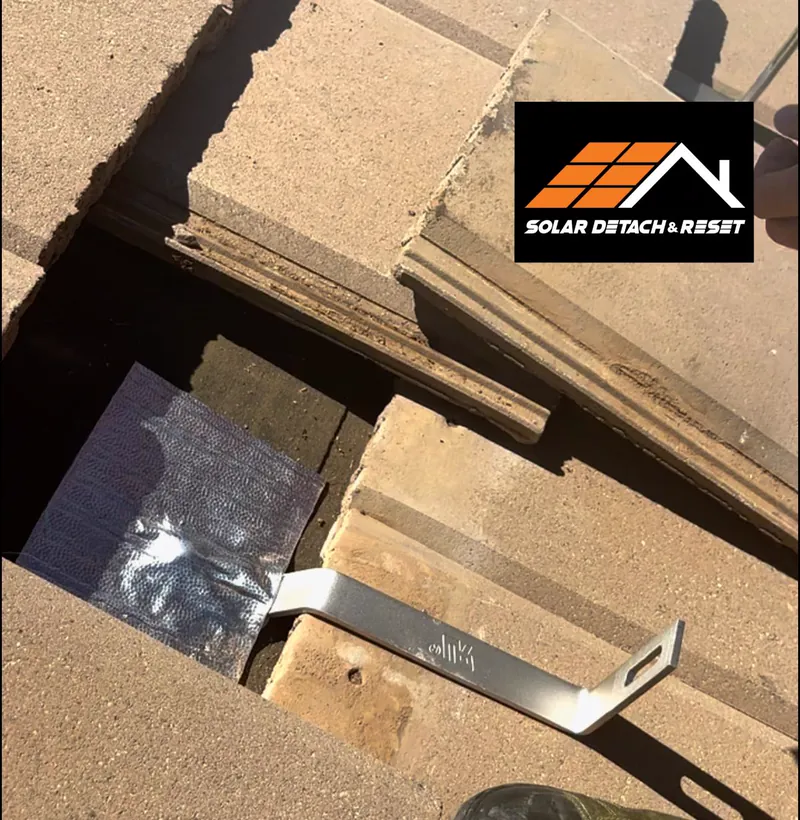
This is where a solar home actually fails, and where no one else looks. Every array is attached through dozens of penetrations, each sealed with material the Arizona sun has been working on since the day it was installed. We inspect every accessible mount, the flashing and sealant, the tile or shingle around the array, and the condition of the roof under it. As an Arizona Roofing Contractors Association board member, we know what a penetration looks like two summers before it leaks.
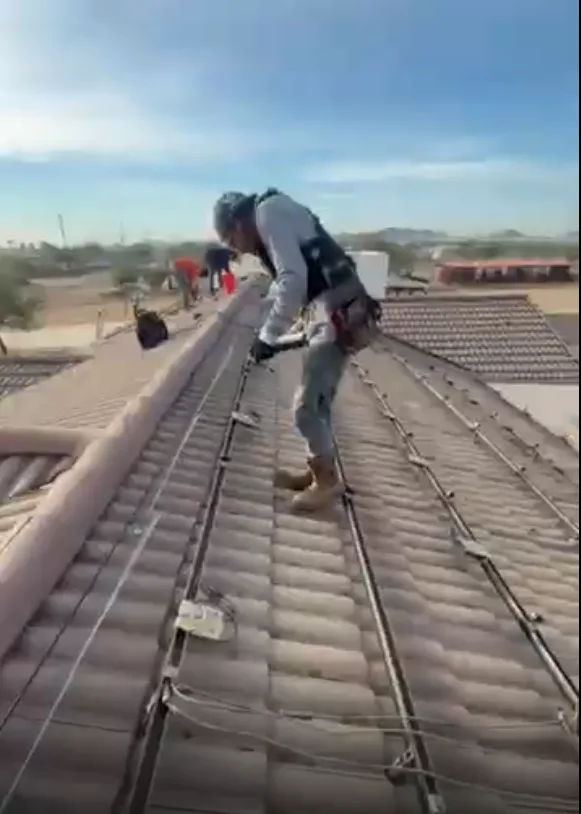
Cracked or delaminated glass, hot spots, loose rail clamps, grounding continuity, conductors that have dropped onto the tile or been chewed by pigeons, connectors that have loosened through thousands of heat cycles. We also note code and labeling issues, which matter more than people expect when a lender or an insurer reads the report.
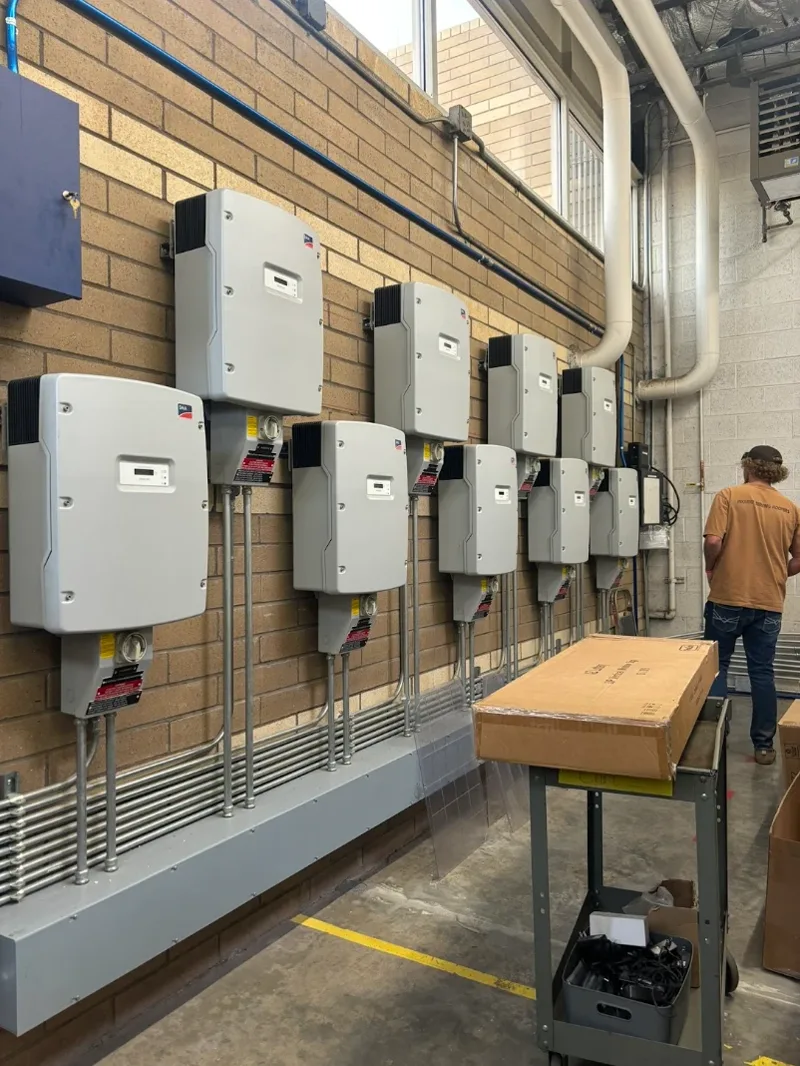
The inverter is the component most likely to fail and the one a buyer should price in. We record make, model, age and fault history, test it under load, check optimizer or microinverter reporting where fitted, and inspect the DC and AC disconnects and the tie-in at the main panel. You get a clear statement of remaining service life and what replacement would cost.
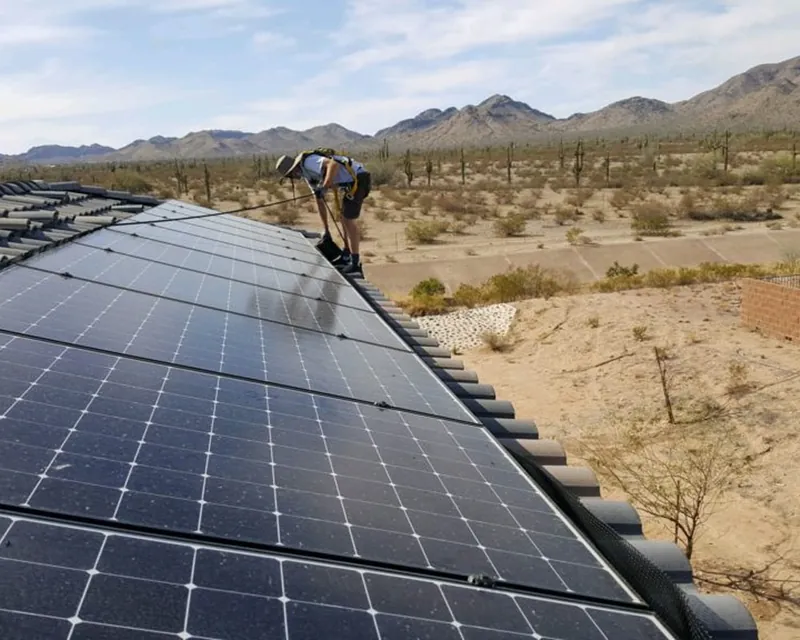
A system can be “working” and still be down 20%: a string out, a failed optimizer, a film of dust. We measure actual output, compare it to what a system of that size should produce in Arizona for the season, and pull the monitoring history where it exists. The result is one number a buyer, seller or attorney can stand on.
Owned outright, financed, leased or on a power purchase agreement: each one changes what happens at closing and what the system is worth. We document serial numbers, system size, install date, permit and interconnection status where available, and the ownership position, so the report answers the questions escrow will ask.
A written, photo-documented report, plain enough for a buyer to read and specific enough for a lender, insurer or attorney to rely on. If anything needs attention, a written repair estimate comes with it. No obligation.
Prices apply across Phoenix metro and Tucson. Call for other areas. The Solar Valuation Report is not a real estate appraisal and we are not appraisers; it is the documented evidence an appraiser, lender, agent or attorney can use.
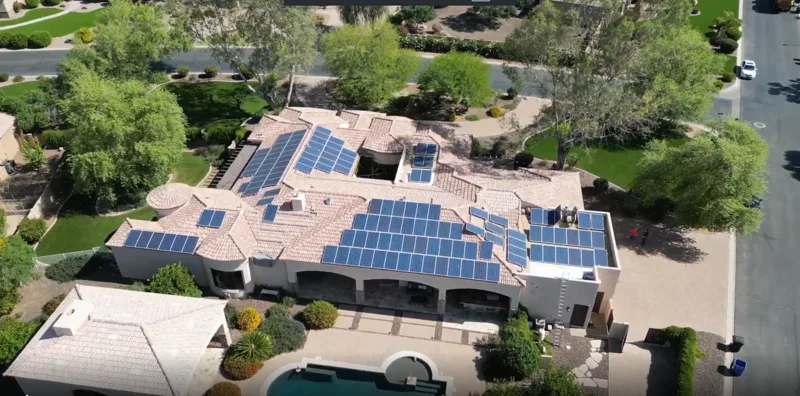
Most solar systems change hands for nothing. The listing says “owned solar,” the buyer has no idea what that is worth, the appraiser has no evidence to work from, and the seller gives away an asset that cost $25,000 to install. On the other side of the table, buyers overpay for systems that are half dead. And in the growing number of disputes with installers that have gone out of business, what the system is worth today is often the entire case.
The Solar Valuation Report answers the question with a method rather than an opinion. We use the PV Value® model, developed with Sandia National Laboratories and endorsed by the Appraisal Institute, whose income and cost approaches HUD and Fannie Mae accept for valuing residential solar. Into it go the things only an on-roof inspection can supply: measured production, the condition of the array and inverter, the equipment age and remaining service life, and current Arizona utility rates. Out of it comes a documented value with the inputs shown, attached to the inspection findings that justify it.
See a sample Solar Valuation Report (PDF)
Sellers and their agents, to price the solar into the listing instead of giving it away. Buyers, to know what they are paying for. Lenders and appraisers, who need evidence, not a brochure. Attorneys and homeowners in disputes with solar companies, where the value of the system is the whole question.
A general home inspector is not licensed to open an inverter or a combiner box, does not carry the equipment to measure production, and usually will not walk the array. Most home inspection reports say something like “solar system present, not evaluated,” and the buyer reads that as a pass. It is not a pass. It is a blank.
That line appears in a large share of Arizona home inspection reports on solar homes. It means nobody has checked the one system on the house most likely to be attached to a failing roof penetration, a dead inverter, or a lease the buyer did not know they were assuming. Our inspection is the evaluation.
We are a licensed Arizona electrical contractor, manufacturer-certified for Tesla, Sunrun, SunPower, SMA, SolarEdge, Enphase and APS, and we inspect and service every system regardless of who installed it, including systems whose installer no longer exists.
Book the wrong one and we will tell you on the phone before anyone rolls a truck. For a deeper look at what inspections cost across the market, see our inspection cost guide.
It goes in the report with photos, and you get a written repair estimate alongside it. There is no obligation; plenty of inspection customers take the report and the estimate into a negotiation and never need us again. If you do want it fixed, we do the work in-house with our own W2 technicians and it carries our workmanship warranty, whether or not the original installer still exists. Where the finding is under the roof rather than on it, the same licensed contractor that found it is the one that seals it, backed by our 100% money-back no-leak guarantee.
“Ivo did an awesome job on a solar inspection for some buyer clients of mine. Professional, courteous, informative, and efficient. I’d absolutely recommend Solar Detach & Reset to others.”
When the inspection finds something. $199 diagnostic for a known fault; repairs quoted in writing first.
This inspection twice a year, plus cleaning, roof inspection, priority scheduling and 10% off repairs. $500 a year.
Troubleshooting, orphaned systems, monitoring, bird guard and everything else a solar home needs after the installer is gone.
How roof age and solar timing interact — and the order that saves you money.
What a correct tile mount looks like, and how the lazy version fails years later.